How to Tell if Your Back Pain Is Muscular or a Herniated Disc
Meta Description
Learn how to differentiate between muscular back pain and a herniated disc, including symptoms, causes, and when to see a doctor.
Introduction
Back pain is one of the most common health problems worldwide. Many people experience it at some point in their lives. However, a key question is whether the pain is caused by muscle strain or a herniated disc. Understanding the difference helps determine the appropriate treatment and recovery plan.
What Is Muscular Back Pain?
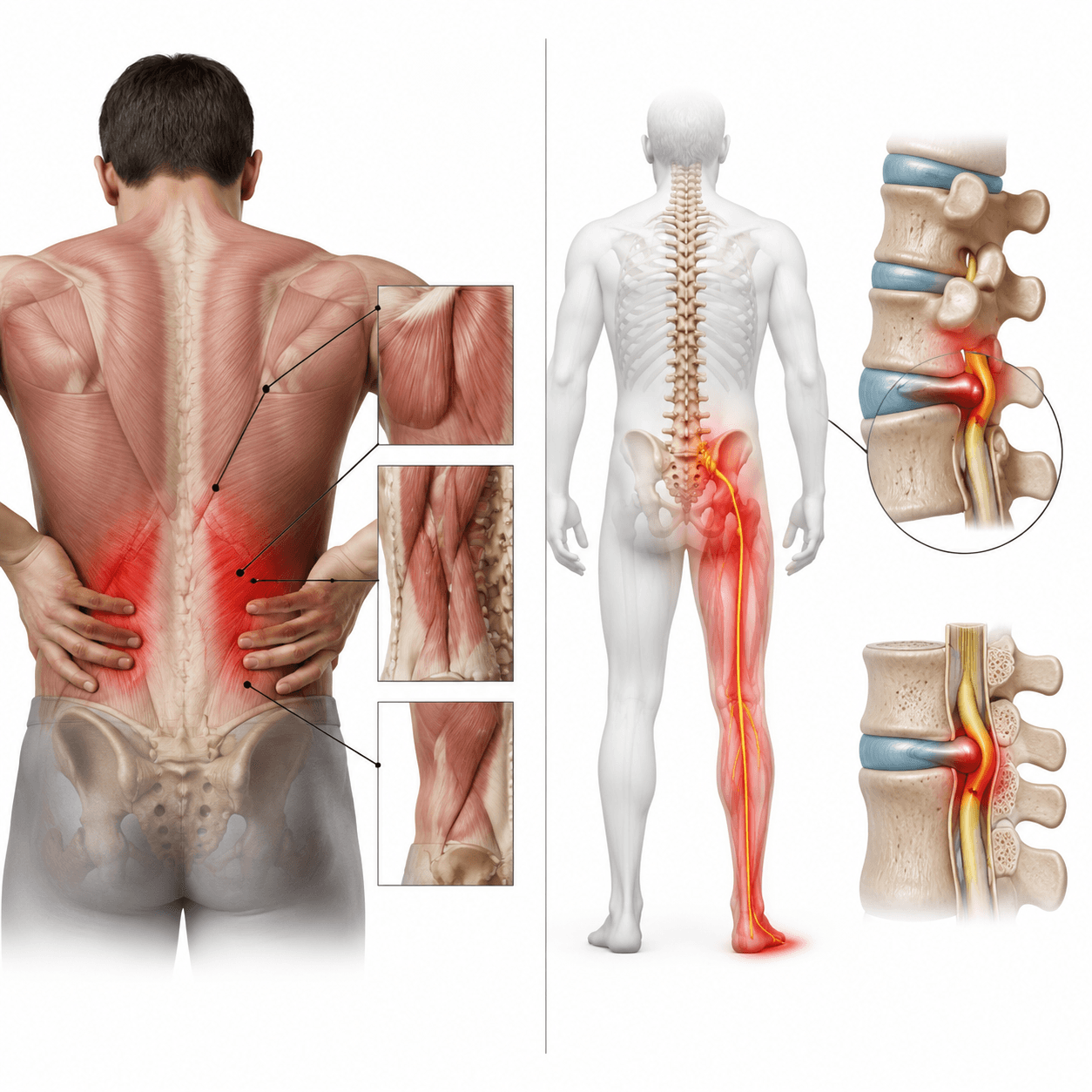
Muscular back pain usually occurs due to muscle strain, overuse, or sudden movement. It often happens after lifting heavy objects, exercising intensely, or maintaining poor posture.
Symptoms of Muscular Back Pain
Localized pain in the lower back
Muscle stiffness or spasms
Pain that worsens with movement
Relief with rest
No radiating pain down the legs
Most cases improve within a few days or weeks with rest, physical therapy, and anti‑inflammatory medications.
What Is a Herniated Disc?
A herniated disc occurs when the soft inner part of a spinal disc pushes through its outer layer, pressing on nearby nerves.
Symptoms of a Herniated Disc
Lower back pain that radiates to the buttocks or legs
Numbness or tingling in the legs
Muscle weakness
Increased pain when sitting for long periods
Sharp or shooting pain along the sciatic nerve
Key Differences Between Muscular Pain and Disc Pain
Muscular Back Pain:
Localized in the back
Improves with rest
Often related to physical strain
Herniated Disc Pain:
Pain radiates down the leg
May include numbness or tingling
Often sharp or shooting pain
When Should You See a Doctor?
Seek medical attention if:
Pain is severe or persistent
Pain spreads to the legs
You experience numbness or weakness
Pain lasts more than a few weeks
Walking or standing becomes difficult
Doctors may use MRI scans, CT scans, or neurological examinations to confirm the diagnosis.
Treatment Options
Muscular Back Pain Treatment
Short-term rest
Physical therapy
Anti-inflammatory medications
Stretching exercises
Herniated Disc Treatment
Specialized physiotherapy
Pain relief medications
Injection therapy
Surgery in severe cases
Prevention Tips
Maintain proper posture
Use correct lifting techniques
Strengthen core and back muscles
Maintain a healthy weight
Conclusion
Understanding whether your back pain is muscular or disc-related is essential for choosing the right treatment. Localized pain that improves with rest is often muscular, while pain radiating to the legs with numbness may indicate a herniated disc and requires medical evaluation.