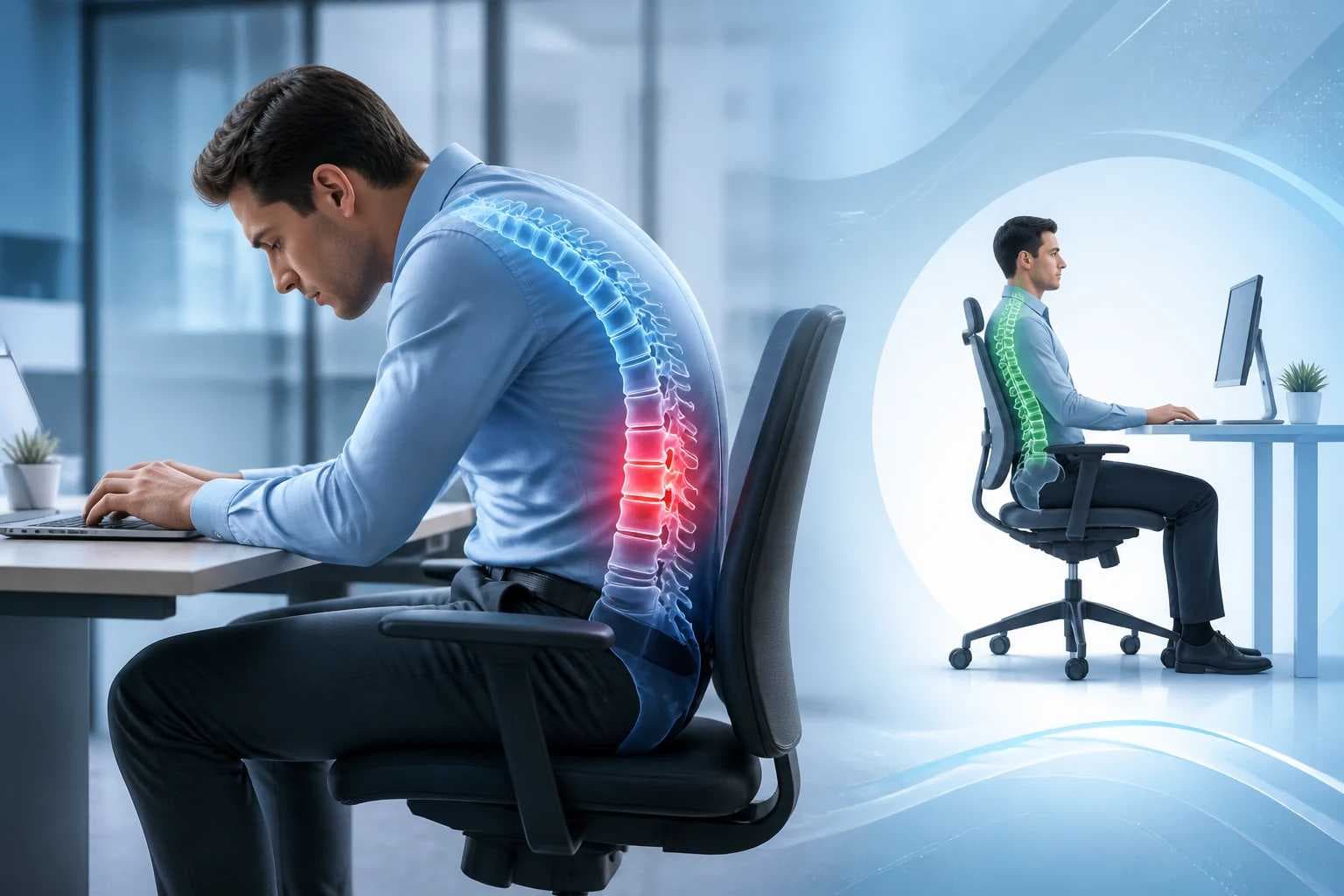
Why Is Prolonged Sitting Harmful to the Spine?
Today, many people spend long hours sitting at a desk, working on a computer, or using their mobile phones. This sedentary lifestyle has made back pain and neck pain among the most common health issues worldwide.
Prolonged sitting—especially when combined with poor posture—can place significant stress on the spinal discs, vertebrae, and supporting muscles. In this article, we examine why sitting for long periods is harmful to the lower back and how its negative effects can be prevented.
How Does Prolonged Sitting Affect the Spine?
The spine is designed for movement. When we sit in a fixed position for extended periods, several important changes occur in the body:
Increased pressure on the intervertebral discs
Reduced activity and weakening of the muscles that support the spine
Stiffness in the spinal joints
Higher risk of chronic lower back and neck pain
Over time, prolonged sitting can contribute to conditions such as lumbar disc problems, chronic muscular pain, and postural disorders.
Why Does Sitting Place More Pressure on the Spinal Discs?
Studies have shown that the pressure exerted on the lumbar discs while sitting can, in some cases, be even greater than when standing.
When a person sits with a rounded back or a forward head posture, the weight of the upper body is unevenly distributed across the vertebrae. This imbalance increases internal disc pressure and, over time, raises the risk of disc injury or herniation.
Symptoms Caused by Prolonged Sitting
People who spend long hours sitting at a desk may experience symptoms such as:
Lower back pain after work
Neck pain or stiffness
Tightness in the shoulder muscles
A feeling of heaviness or fatigue in the lower back
Reduced spinal flexibility
In some cases, if the pressure on the discs continues, the pain may radiate down the legs — a warning sign that requires medical evaluation.
Who Is at Greater Risk?
Certain groups are more susceptible to problems caused by prolonged sitting, including:
Office employees and desk workers
Programmers and frequent computer users
Drivers
Students
Individuals with low physical activity
For these groups, maintaining proper ergonomics and staying physically active is especially important.
How to Prevent Spinal Damage While Sitting
With a few simple adjustments, you can significantly reduce the stress placed on the spine:
How to Prevent Spinal Damage While Sitting
1. Stand Up Every 30 to 60 Minutes
A few minutes of walking or light stretching can significantly reduce the pressure placed on the spinal discs.
2. Maintain Proper Sitting Posture
Keep your back fully supported by the chair
Place your feet flat on the floor
Position your monitor at eye level
3. Use an Appropriate Chair
Ergonomic chairs that support the natural curve of the lower back help reduce unnecessary strain on the spine.
4. Strengthen Your Core Muscles
Exercises that target the abdominal and lower back muscles improve spinal support and reduce the risk of injury.
5. Perform Stretching Exercises
Simple stretches for the neck, shoulders, and lower back help prevent stiffness and improve mobility.
When Should You See a Doctor?
If you experience any of the following symptoms, it’s best to consult a specialist for a more detailed evaluation:
Back pain that lasts longer than a few weeks
Pain radiating down the legs
Numbness or tingling in the legs
Muscle weakness
In such cases, your doctor may recommend MRI or other imaging tests for accurate diagnosis.
Conclusion
Prolonged sitting is one of the major contributors to back pain and spinal problems in the modern lifestyle. However, by maintaining proper posture, incorporating regular movement into your day, and strengthening your back muscles, you can significantly reduce the risk of spinal issues.
If spinal pain continues or becomes recurrent, consulting a specialist can help identify the underlying cause and determine the best treatment plan.
Frequently Asked Questions
Does prolonged sitting cause a herniated disc?
Extended sitting—especially with poor posture—can put excessive pressure on the spinal discs and increase the long‑term risk of disc injury.
How often should I get up from my desk?
It is recommended to stand up and walk or stretch every 30 to 60 minutes.
What is the best sitting position to prevent back pain?
Your back should be supported by the chair, your feet should rest flat on the floor, and your monitor should be at eye level.
Dr. Ali Nemati
Neurosurgeon & Spine Surgeon