Explanation by Dr. Ali Nemati
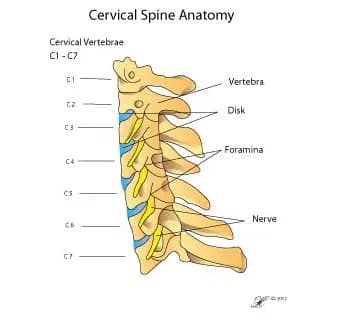
The cervical spine consists of 7 vertebrae (C1–C7) separated by intervertebral discs. These discs:
• Allow free movement of the spine
• Reduce friction between vertebrae
At the back of each vertebra is a cavity that forms the spinal canal along the vertebral column, housing the spinal cord and meninges.
At each vertebral level, a pair of spinal nerves branches out through foramina (one to the left and one to the right). These nerves:
• Transmit nerve signals to muscles, skin, and body tissues
• Provide sensation and movement for the entire body
The sensitive spinal cord and delicate nerves are supported by strong muscles and ligaments attached to the vertebrae.