3 Common Mistakes Patients with a Herniated Disc Make | What Worsens Lower Back Disc Pain?
Meta Description:
Many patients with a herniated disc unknowingly make mistakes that can worsen pain and increase pressure on the spine. In this article, learn the 3 most common mistakes patients with a herniated disc make and how to manage the condition properly.
What Is a Herniated Disc?
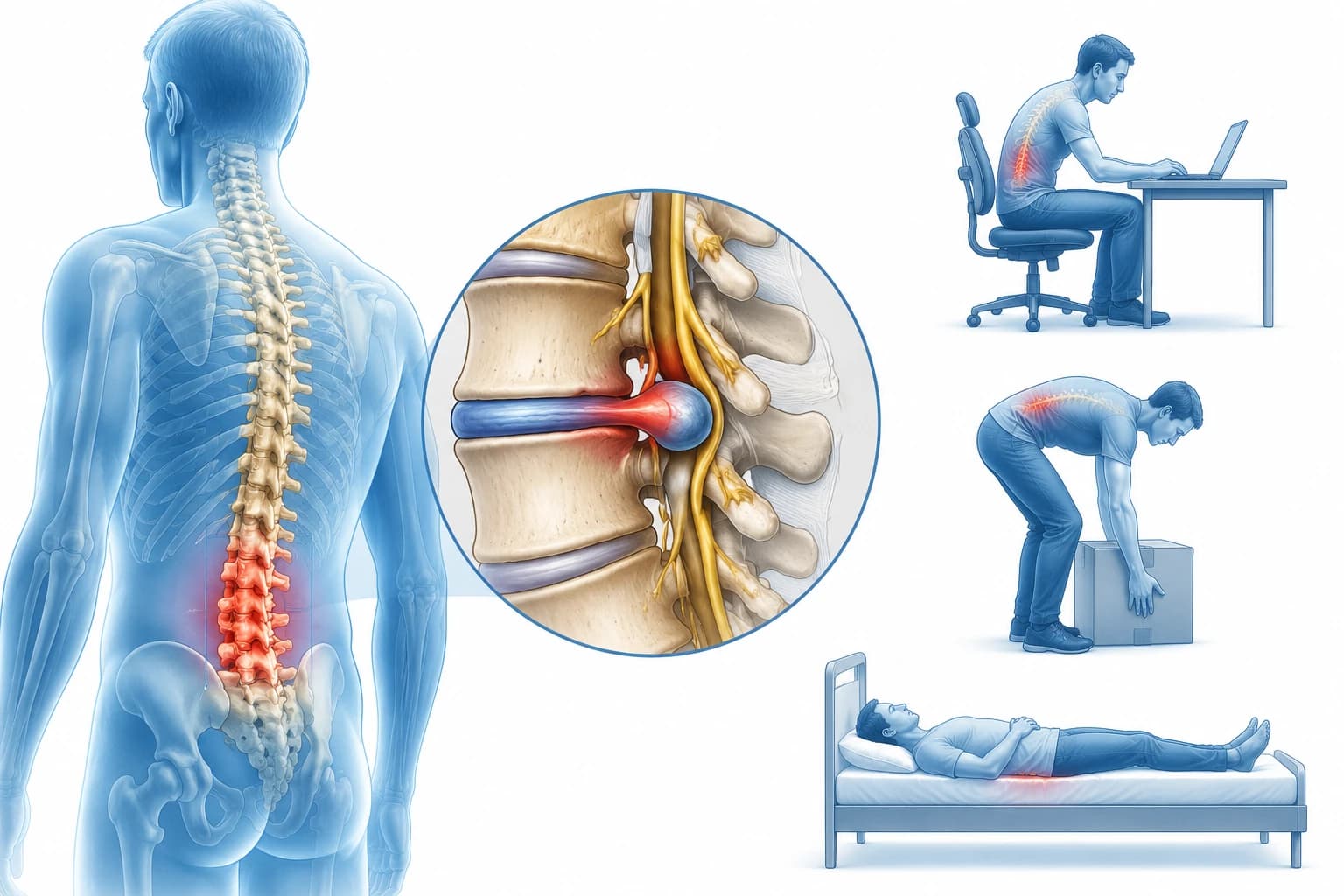
A herniated disc is one of the most common spinal conditions. It occurs when the intervertebral disc moves out of its normal position and presses on nearby spinal nerves.
This pressure can cause symptoms such as:
Severe lower back pain
Pain radiating to the legs (sciatica)
Numbness or tingling in the legs
Muscle weakness
Limited movement
Many patients, without proper guidance, do things that can make the condition worse.
3 Common Mistakes Patients with a Herniated Disc Make
1. Staying in Bed for Too Long
One of the biggest misconceptions is that patients should stay in bed for a long time to heal.
However, modern medical research shows that prolonged bed rest can lead to:
Weak back muscles
Reduced spinal flexibility
Joint stiffness
Slower recovery
Correct Approach
Instead of prolonged rest:
Keep doing light daily activities
Take short walks
Perform doctor-recommended exercises
2. Doing the Wrong Exercises
Some patients believe that any exercise is good for a herniated disc, but certain movements can place excessive pressure on the spine.
Exercises that may worsen symptoms include:
Heavy sit-ups
Lifting heavy weights
Sudden twisting movements
High-impact sports
These activities may increase disc pressure and worsen sciatic pain.
Better Exercises for a Herniated Disc
Usually recommended exercises include:
Gentle stretching
Core strengthening exercises
McKenzie exercises
Swimming and walking
3. Ignoring Proper Posture
Poor posture is a major factor that can worsen disc problems.
Sitting or standing incorrectly increases pressure on spinal discs.
Common Posture Mistakes
Sitting too long at a desk
Slouching while using a phone or laptop
Lifting objects incorrectly
Sleeping on an unsuitable mattress
Proper Posture Tips
Sit upright with lower back support
Use an ergonomic chair
Bend your knees when lifting objects
Sleep on a supportive mattress
When Should You See a Doctor?
Seek medical attention if you notice:
Severe or persistent back pain
Pain radiating to the legs
Numbness or weakness in the legs
Difficulty walking
Loss of bladder or bowel control
Early diagnosis can prevent further disc damage.
Treatment Options for a Herniated Disc
Non-Surgical Treatment
Physical therapy
Anti-inflammatory medications
Corrective exercises
Epidural injections
Surgical Treatment
In severe cases where conservative treatment does not help, surgery may be necessary.
FAQ
Is walking good for a herniated disc?
Yes. Light walking is one of the best activities for reducing lower back disc pain.
Can a herniated disc heal without surgery?
Most patients improve with non-surgical treatments such as physical therapy and exercise.
Is sitting for long periods harmful for a herniated disc?
Yes. Prolonged sitting can increase pressure on the lumbar discs.
Conclusion
A herniated disc is a common spinal problem, but many patients make mistakes that worsen their symptoms. Avoiding prolonged bed rest, choosing the right exercises, and maintaining proper posture can play an important role in reducing pain and improving recovery.