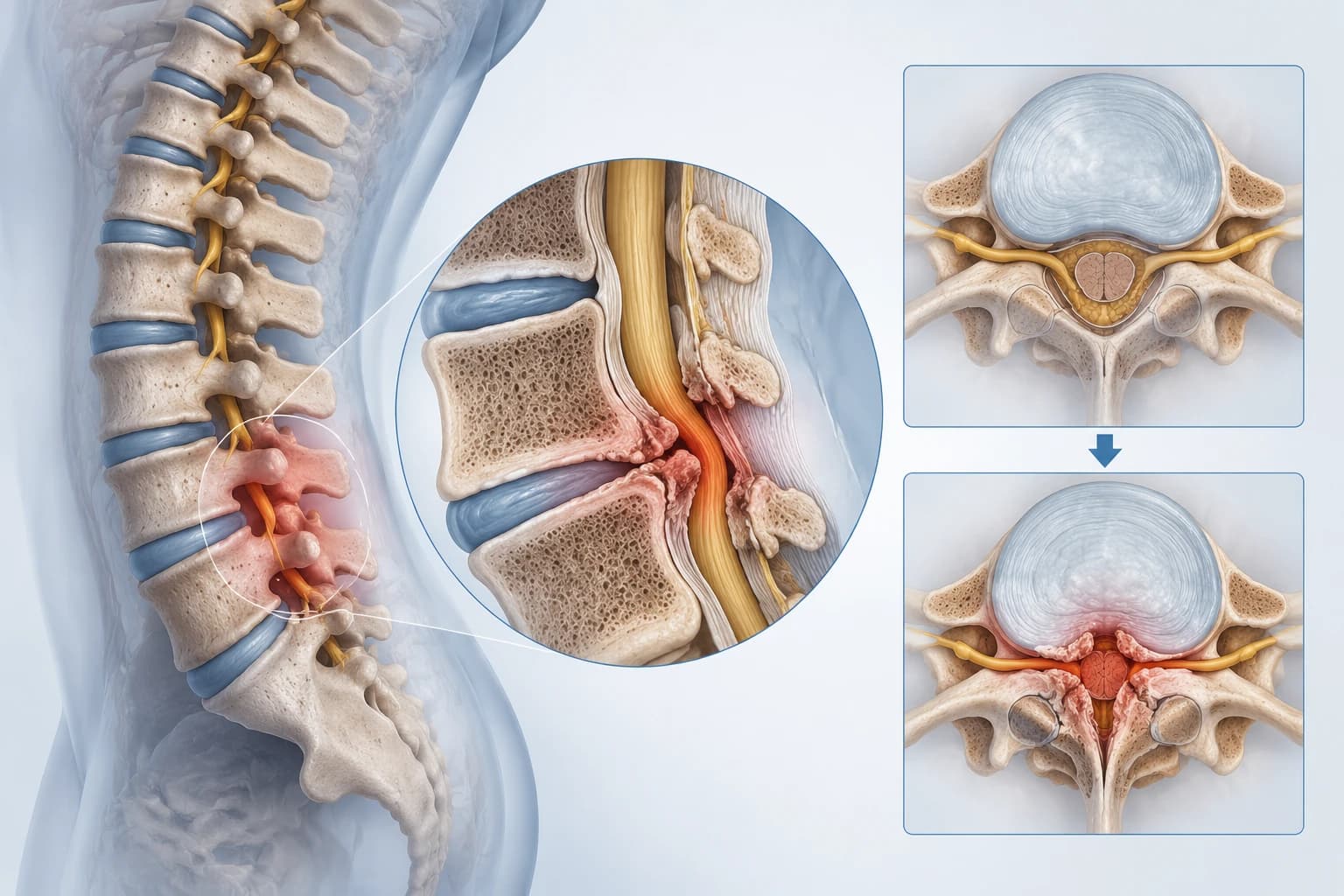
What is Spinal Stenosis? | Symptoms, Causes and Treatment
Spinal stenosis is a medical condition in which the spaces within the spine narrow, putting pressure on the spinal cord and nerves. This condition most commonly affects the lower back (lumbar spine) and the neck (cervical spine).
Spinal stenosis is often related to aging and degenerative changes in the spine.
Symptoms of Spinal Stenosis
Common symptoms include:
Lower back pain
Neck pain
Numbness or tingling in arms or legs
Muscle weakness
Difficulty walking
Pain that worsens when standing or walking
Causes of Spinal Stenosis
The most common causes include:
Osteoarthritis
Herniated discs
Thickened ligaments
Bone spurs
Spinal injuries
Congenital spinal canal narrowing
Diagnosis
Doctors may use several imaging tests:
MRI scan
CT scan
X‑ray
Electromyography (EMG)
Treatment for Spinal Stenosis
Non‑surgical treatment
Physical therapy
Anti‑inflammatory medications
Pain management
Epidural steroid injections
Surgical treatment
If symptoms become severe, surgery may be recommended.
The most common procedure is:
Laminectomy – removing part of the vertebra to relieve pressure on the spinal cord.
Prevention
You can reduce the risk of spinal stenosis by:
Maintaining a healthy weight
Strengthening back and core muscles
Practicing good posture
Staying physically active