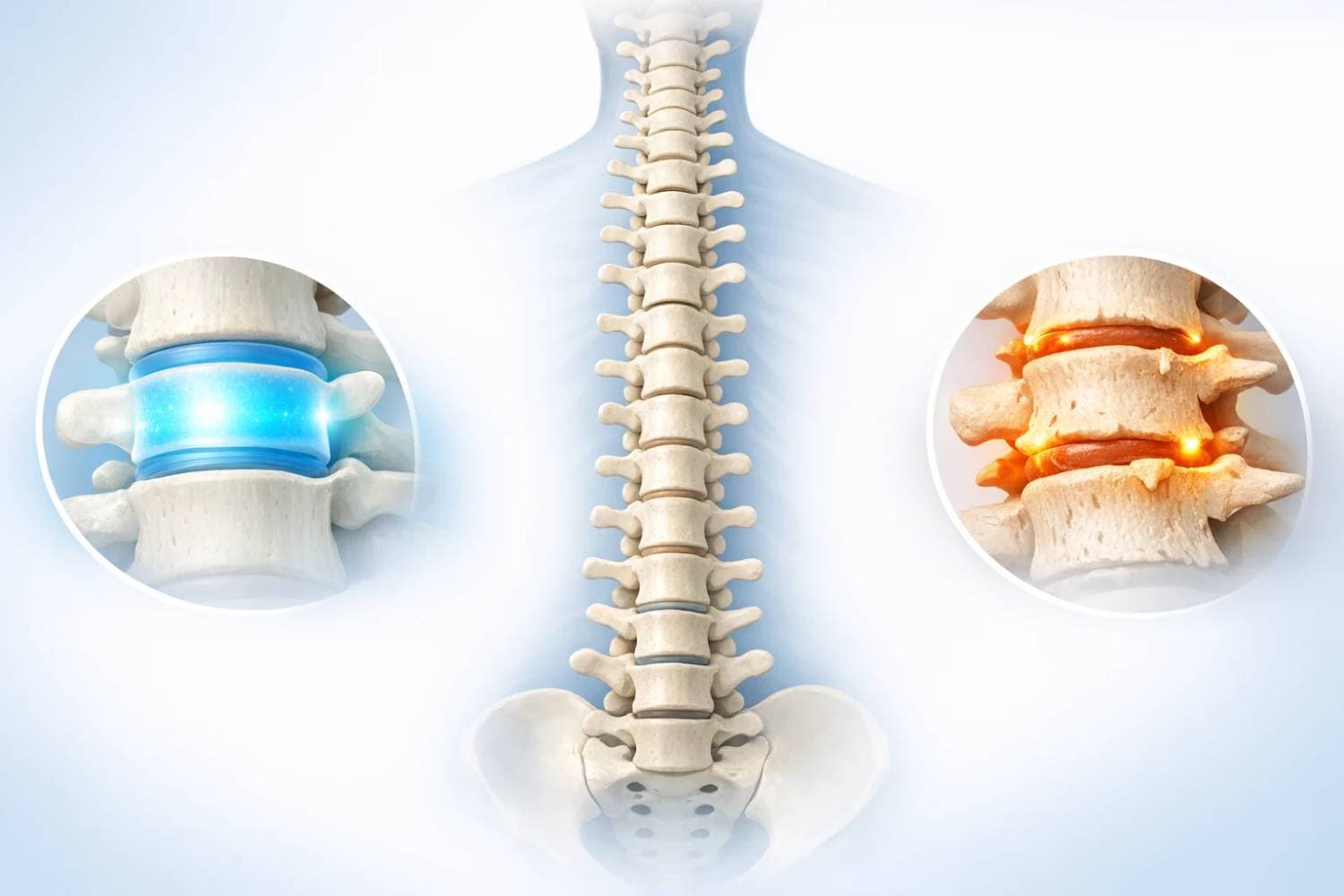
Disc or Arthritis: Which One Is Really Causing Your Back and Neck Pain?
Back and neck pain are among the most common reasons people visit spine specialists and surgeons.
Many patients ask this question at their very first appointment:
“Is my pain from a disc problem or arthritis? Is my spine worn out or is a disc herniated?”
If you’re also confused between these two terms, this article is exactly for you.
Here, in simple language and based on medical evidence, we explain the difference between disc problems and spinal arthritis, the symptoms of each, how they are diagnosed and treated, and help you better understand which one might be causing your pain.
Table of Contents
• What Is a Lumbar Disc?
• What Is Spinal Arthritis?
• Difference Between Disc and Arthritis in Terms of Pain
• Difference Between Disc and Arthritis in Neurological Symptoms
• How Are Disc Problems and Arthritis Diagnosed?
• Treatment of Lumbar Disc: Is Surgery Always Necessary?
• Treatment of Spinal Arthritis
• When Is Back Pain Dangerous?
• Conclusion: Disc or Arthritis – Which One Is Behind Your Pain?
• Specialist Spine Consultation in Shiraz
1. What Is a Lumbar Disc?
Between the vertebrae of the spine, there are soft, flexible structures called intervertebral discs.
These discs play an important role:
• They act like shock-absorbing pads
• They prevent the vertebrae from rubbing against each other
• They allow the spine to bend, straighten, and rotate
Each disc consists of two parts:
• A soft, gel-like core in the center
• A tough, fibrous ring around it
When the outer ring becomes damaged or weak for any reason, part of the gel-like core can shift outward. If this shift puts pressure on nerve roots or the spinal canal, we call it a herniated disc—often referred to as a “lumbar disc herniation” or “lumbar disc problem.”
Common Causes of a Lumbar Disc
• Lifting heavy objects with improper technique
• Sudden bending combined with twisting the lower back
• Prolonged sitting at a desk, using a computer, or driving
• Weak core muscles (abdominal and back muscles)
• Excess body weight
• Spinal misalignments
• Aging and the natural reduction of disc fluid
Sometimes, a patient can remember a specific movement as the “trigger” for the pain (for example, lifting a heavy vase or holding a child), but the underlying disc weakness may have developed years earlier.
Symptoms of a Lumbar Disc: When the Nerve Is Under Pressure
Disc symptoms depend on the level of involvement and how much the nerve is compressed, but a few signs are especially common and characteristic:
• Radiating pain from the lower back down the leg (sciatica)
• Tingling, “pins and needles,” numbness along the nerve pathway (thigh, shin, or foot)
• Muscle weakness (for example, it becomes difficult to lift the toes)
• Pain that worsens with prolonged sitting, sneezing, coughing, or straining
In some patients, the back may “lock” and movement becomes difficult.
Important note:
Disc-related pain is often one-sided (for instance, only the right leg), and patients can usually point to the exact path where the pain radiates.
2. What Is Spinal Arthritis?
Spinal arthritis is essentially a type of “joint wear and tear” in the spinal region.
The small joints between the vertebrae gradually wear down, especially with age.
This wear and tear causes:
• The protective cartilage of the joint to thin
• The bones to get closer to each other
• Bone spurs (osteophytes) to form around the joint
• Joint movement to become painful and stiff
In simple terms, this process can be called the aging of the spinal joints.
Who Is More Likely to Develop Spinal Arthritis?
• People over 45–50 years old
• Individuals with a history of heavy physical labor (carrying loads, manual labor, farming, etc.)
• People who have sat or stood incorrectly for years
• Overweight individuals
• People with a family history of arthritis
Symptoms of Spinal Arthritis: Gradual, Wear-and-Tear Pain
Unlike a disc problem, which often presents with sudden, sharp pain, spinal arthritis typically shows its signs slowly and chronically:
• Dull, gradual pain in the lower back or neck
• Stiffness in the spine (especially in the morning or after prolonged sitting)
• Reduced flexibility (e.g., bending down to tie shoelaces becomes difficult)
• Pain that increases with prolonged standing or walking, and improves with rest
• Sometimes a slight grinding or popping sound during movement
In this condition, the pain is usually localized and does not radiate down to the foot like with a disc problem, unless bone spurs press on a nerve in advanced stages.
3. Difference Between Disc and Arthritis in Pain Type
One of the most crucial ways to differentiate between these two conditions is by paying attention to the type of pain.
Pain in a Lumbar Disc:
• Shooting, electric shock-like, or sharp
• Usually starts in the lower back and radiates to the buttock and leg
• May be accompanied by tingling, numbness, or a loss of sensation
• Worsens when sitting, bending, or lifting heavy objects
• Sometimes a patient might say, “The pain shoots from my back like lightning down to my foot.”
Pain in Spinal Arthritis:
• Dull, aching, and bothersome
• Mostly felt in the lower back or neck itself
• Accompanied by stiffness in the morning, which improves with a little walking
• Intensifies with prolonged activity (standing for a long time, long walks)
• Usually does not have the characteristic shooting pain down the leg or arm
To put it simply:
• Disc: Nerve pain, shooting
• Arthritis: Mechanical pain, localized wear-and-tear
4. Difference Between Disc and Arthritis in Nerve Symptoms
Pressure on a nerve is what causes nerve-related symptoms such as numbness and weakness.
In a Lumbar Disc:
Direct pressure on the nerve root can lead to:
• Numbness in certain parts of the leg or foot
• Weakness in specific muscles (for example, foot drop—where lifting the front of the foot becomes difficult)
• Reduced reflexes
• In severe cases: loss of bladder or bowel control (a medical emergency)
In Spinal Arthritis:
In the early stages, there is usually no direct pressure on the nerve. Therefore:
• Clear numbness and weakness are often not seen
• Symptoms are more commonly pain and stiffness
However, in advanced stages of spinal arthritis, bone spurs and spinal canal narrowing may eventually press on nerves and produce symptoms that look similar to a disc problem.
That’s why an accurate diagnosis can only be made with a proper physical exam and imaging tests—not based on the pain type alone.
5. Methods for Diagnosing Disc and Arthritis
A diagnosis should not be based solely on an X-ray or an MRI; rather, it’s a combination of the following:
• Detailed patient history
• Physical and neurological examination
• Appropriate imaging
MRI for Disc Issues:
For accurate diagnosis of:
• Disc herniation
• Location and severity of nerve compression
• Spinal canal condition
MRI is the best and most precise method.
X-ray for Arthritis:
To visualize:
• Narrowing of the space between vertebrae
• Presence of bone spurs
• Joint deformities
An X-ray is often sufficient and more cost-effective.
❗ An Important Note:
Sometimes a patient has an MRI showing a herniated disc, but they experience no symptoms at all. The mere presence of a disc issue on an MRI does not automatically mean surgery is needed or that it’s the definitive cause of pain. This is where the expertise of a spine surgeon becomes crucial.
6. Lumbar Disc Treatment: Is Surgery Always Necessary?
Contrary to popular belief, most cases of lumbar disc problems are managed with non-surgical treatments.
Non-Surgical Treatments for Lumbar Disc Issues:
• Short-term rest (not prolonged absolute bed rest)
• Anti-inflammatory medications and muscle relaxants
• Specialized physical therapy
• Strengthening exercises under expert guidance
• Targeted injections near the spine (e.g., epidural injections)
• Correcting posture during sitting, sleeping, and daily activities
When Is Surgery Necessary?
• Severe and persistent pain that is resistant to medication and physical therapy
• Progressive weakness in the leg or arm
• Impaired bladder or bowel control
• Severe spinal canal stenosis with significant nerve compression
In these situations, surgery can relieve pressure on the nerve and prevent permanent damage.
6. Lumbar Disc Treatment: Is Surgery Always Necessary?
Contrary to popular belief, most cases of lumbar disc problems are managed with non-surgical treatments.
Non-Surgical Treatments for Lumbar Disc Issues:
• Short-term rest (not prolonged absolute bed rest)
• Anti-inflammatory medications and muscle relaxants
• Specialized physical therapy
• Strengthening exercises under expert guidance
• Targeted injections near the spine (e.g., epidural injections)
• Correcting posture during sitting, sleeping, and daily activities
When Is Surgery Necessary?
• Severe and persistent pain that is resistant to medication and physical therapy
• Progressive weakness in the leg or arm
• Impaired bladder or bowel control
• Severe spinal canal stenosis with significant nerve compression
In these situations, surgery can relieve pressure on the nerve and prevent permanent damage.
7. Spinal Arthritis Treatment
The treatment for arthritis is typically long-term and phased, aiming to:
• Reduce pain
• Increase muscle strength
• Improve quality of life
Principles of Arthritis Treatment:
• Weight loss if overweight
• Correcting posture while sitting, standing, and walking
• Avoiding prolonged standing or sitting
• Using a suitable mattress for sleep
Medical Treatments for Arthritis:
• Anti-inflammatory and pain-relieving medications
• Physical therapy and therapeutic exercises
• Intra-articular or peri-spinal injections in specific cases
• In advanced cases and when resistant to treatment, surgery (e.g., for severe stenosis)
For many patients, regular and proper exercise, along with lifestyle modifications, plays a key role in managing arthritis.
8. When Is Back Pain Dangerous?
Most back pains are benign and improve with simple treatments.
However, if you notice the following symptoms, you should seek medical care promptly:
• Sudden, severe pain that progressively worsens over time
• Weakness in the legs or difficulty walking
• Widespread numbness in the legs or around the buttocks/anal area
• Problems controlling urination or bowel movements
• Pain accompanied by fever, weight loss, or a history of cancer
These can be signs of more serious spine conditions and require urgent evaluation.
9. Summary: Disc or Arthritis—Which One Is to Blame for Your Pain?
If we want to summarize it briefly:
Disc:
• Shooting pain
• Pain radiating to the leg or arm
• Numbness, tingling, or weakness
• The main diagnosis is made with MRI
Arthritis:
• Dull, long-lasting pain
• Stiffness and reduced flexibility
• Often localized to the lower back or neck
• Often diagnosed with a plain X-ray
But don’t forget this:
Many patients have a combination of disc and arthritis—especially at older ages.
Therefore, relying on self-diagnosis or only looking at the MRI result can be misleading.
The final diagnosis should always be made by a spine specialist.
10. Specialized Spine Consultation in Shiraz
If you—or one of your loved ones—are experiencing:
• Persistent low back or neck pain
• Shooting pain to the leg or arm
• Tingling, numbness, or muscle weakness
then a specialized examination can help with an accurate diagnosis and the selection of the most appropriate treatment, and may help prevent the condition from progressing.
Dr. Ali Ne’mati
Neurosurgeon and Spine Surgeon – Shiraz